the gospel of the body
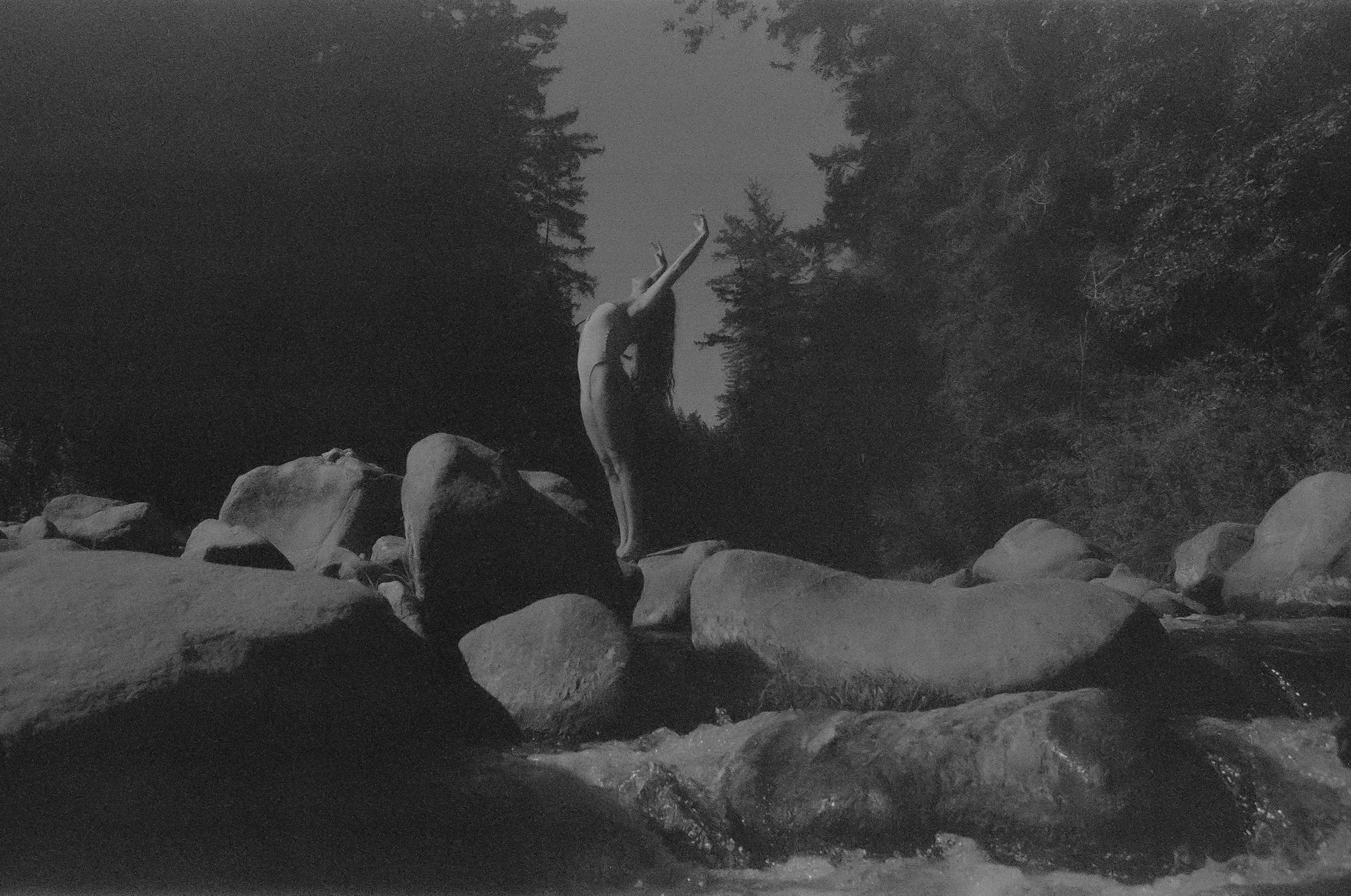
Between Worlds — Daisy, Ritual Session 2024
Where Jung spiritualized the feminine, Marion and Clarissa pulled her into the body.
For years I have admired much of Jung’s work. I’ve enjoyed the subjectivity of his analysis. How he explored the unconscious within his own psychosis and gave language to the human experience; to the soul wandering in the dark. His writing initiated connection between ego and soul. His words gave me a place to rest. A space to feel uncertain and that be okay. A place to belong somewhere, even if it meant only my inner world. Even if home was a liminal space.
His courage to engage with his experience and meet himself deeply allowed his words to stand through time. His writing meets each of his readers beyond his passing, a lighthouse for spiritual thinkers in a Western culture. Where much of the mind is pathologized, there’s a refreshment found in a depth lens which seeks to understand with sacred regard.
He gave me language for the feminine, revealing her in myth and symbol. He brought her back into my life where religion had erased her. The archetypal nature hovered above ground like a beautiful constellation. Something I could admire with awe and reverence. But awareness without integration felt disembodied. How could I reach her beyond vision and dream? How could I walk through the symbolic door he had opened with my own body?
Somatics became my next venture. Connecting to emotion, not just awareness. A way of creating safety by aligning my actions, my environments, and my community with what I could actually feel.
I learned to enter the depths. To breathe through each state of joy and grief. To let grief crack me open into something softer. To witness emotions cycle through me like seasons.
It felt as though I had been holding the map for years but had only then began the journey — meeting the felt sense, letting presence become the first language between her and me. Trusting her. Coming home to sensation. Listening for the subtle voices. Honoring truth as it rises in the body.
Feeding my doll bread.
I’ll never forget the first time I read Women Who Run With the Wolves by Clarissa Pinkola Estés. My own myth appeared before my eyes. My heroine’s journey became clear. The narrow path I had walked for years: following the whispers of my soul just enough to keep myself intact but not lose everything I loved. Grief hit me like a brick. The sacrifice I would have to make unearthed itself before me. My ego wrestled my soul, trying to negotiate who I might lose. It felt like an awakening. A realization from the inside out. Something no one could argue or negotiate me out of, not even myself.
The wild woman is an endangered species — this replayed in my mind. Yes, she was. And I suddenly knew the most important work I could do as a woman was bring her back. Through my own body. Through my own myth.
I began my journey as an analysand and was introduced to the work of Marion Woodman. Her understanding of the unconscious as the body itself landed in me like a knowing. Of course. This archetypal resonance bridged my understanding of psyche to my understanding of soma, like a rainbow connecting heaven and earth. Marion pulled her into body through the wound. Through craving. Through blood and bone. Cycles and creativity. Eros and sexuality. The moon mirroring the seasons of earth. She pulled the feminine back down where she could breathe and bleed with me.
Marion studied addiction through the doorway of her own body — through disordered eating, through longing, through the way hunger is a map back home. Clarissa whispered her stories into the caves of my psyche, returning me to the wolf tracks, the body as a compass, bone by bone. She didn’t speak to the feminine as a haloed light but as cycles, instincts, the wild and wounded both.
As I reflected on my own experience, I couldn’t reconcile the split between light and dark feminine. Could she really be so black and white? Who divided her in two? Was “light feminine” ever feminine at all, or simply the masculine masquerading as her? The good woman society offered me always felt like a lifeless doll. A pretty thing. Easy to monetize and control. Part of an image, but never the whole picture.
And in my own body I felt this tension. I was raised to split her into good and bad, light and dark, saint and shadow.. a fracture in her wholeness. Yet my body held another gospel. see my accompanying reflection on the twins
She was never two.
She was never divided.
She was not a symbol to decode.
She was not a moral category.
She had always been a single pulse. Moving through shadow and sunlight with the same steady heartbeat. She was a living presence, threading herself through instinct, hunger, creativity, grief, desire, and dream.
The work was not to choose between her faces, but to remember the body where they meet. The body where she becomes whole again.
I admire Jung’s courage to open the symbolic door to her mysteries. To meet her within his psyche, within his creativity, within his own embodied practice. And I feel ever grateful to Marion and Clarissa for carrying her back into marrow, bone, womb, and hunger <3